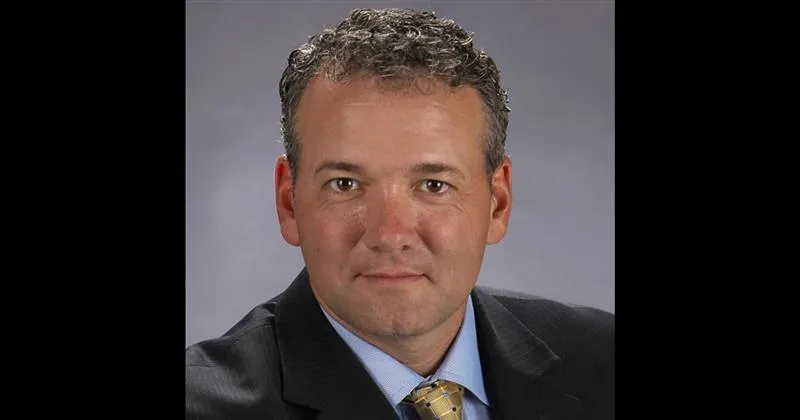
Dr. Bill Fera, principal at Deloitte
Photo courtesy of Deloitte
LOS ANGELES – Dr. Bill Fera, principal at Deloitte, sat down with MobiHealthNews for an in-person interview to discuss the importance of human oversight, particularly as agentic AI can modify its own behavior over time, and computer vision as the next major frontier in healthcare.
MobiHealthNews: Do you think there is enough transparency right now about how AI models are trained?
Dr. Bill Fera: No.
I think it's the nature of the commercial enterprise. I think it's the nature of the historical norms of software development that there is always a black box, and now we need — we're demanding — transparency. And I think it's been maybe a little slower to come than most would like, but I think we'll get there.
We need to have these trustworthy frameworks. There's going to be more and more pressure for openness, but right now, we have some work to do.
MHN: Do you think we are in an AI bubble?
Fera: No.
MHN: A hype?
Fera: No. I think this is real, and I think it's just going to continue. If we just look at healthcare, and we think about the fact that nobody knew what generative AI was a little more than three years ago, before ChatGPT in November 2022, nobody knew what it was. And now we have a tremendous uptake of our clinician population with ambient documentation. And then healthcare is leading with technology, and that doesn't tend to be something we do in healthcare is lead with technology.
And so, if we think about the number of folks that are already using generative AI, it's pretty substantial, and hot on the heels of it is agentic AI, which is another huge advance. So, we had a contextual setting with generative, and now, less than three years later, we have reasoning.
To your point about transparency, I think we are going to go through a lot of figuring out how to govern these very powerful technologies, but I don't think it's hype. I don't think it's a bubble. I think we will continue to see widespread adoption and scaling.
I think we're going to see more and more orchestration as real agents start to be deployed responsibly, and then we'll start to see more of the orchestration between agents.
It will be interesting to see how vendor/vendor agents interact versus, do we see more build on infrastructure platforms, whether that's a cloud platform, whether that's an on-premises platform? But I think we'll see some more building to fill that space of inner-application agentification, if you will.
MHN: When you think about how a healthcare system and care providers can ensure that AI is being adopted to do more good than harm, what kind of recommendations do you make to care systems?
Fera: We think the hard work of all of this is monitoring. It's fun to build, and it's fun to say, "Hey, I built this! I did this!" But what happens to it six months later?
MHN: And agentic AI changes itself.
Fera: Yes. It is modeling itself. It's learning on its own, so making sure that you're directing and monitoring and calling out those discrepancies in real time, so you ensure that you're giving the feedback.
I do get a little bit nervous when I hear people ... and we're still going to have a lot of self-referential learning, but it still has to be observed by human beings at some levels.
But I think that's the hard work that people have to figure out how they are going to continue doing that.
MHN: What are your thoughts on computer vision?
Fera: I mean, it's a great question because everybody obviously wants to talk about large language models, and for good reason – they're the most accessible to people right now.
But I think the next innovation that we're going to see tangibly will be from computer vision – the ability to predict falls, the ability to predict violence, the ability to help with throughput in a natural way through a hospital. We're seeing some pretty impressive return on investment from hospitals that have gone down that road.
I think that's the next big thing – facial recognition to do all of your intake automatically, not even having to use an agent necessarily, or an avatar, but just your face doing all of the work.
MHN: What do you mean by prevention against violence?
Fera: So, these models now can predict agitation in individuals or the way that they're moving that can predict aggression. So, that's one of the things that they've been able to do. And unfortunately, with the rise of violence against caregivers, it is something that we have to be cognizant of.
As we look at innovation horizons, large language models are already there and people are using them. Computer vision is very much on the horizon, and then I think physical AI with robotics will continue to accelerate, and that will be the third horizon that we see.