Provider

ChatGPT for Clinicians uses OpenAI's GPT-5.4 model and allows clinicians to earn CME credits.

MaryAnn Connor, NYU adjunct informatics professor, and Olga Kagan, FANA CEO, recommend that healthcare organizations hold recurring cyberattack and outage drills to prevent care disruption when digital tools are not available.

Lalithya Yerramilli, Cohere Health's SVP of payment solutions, says the company uses AI to streamline prior authorization and reimbursement processes but not to deny care or claims.
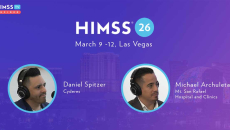
Daniel Spitzer, Cyderes' SVP and general manager, healthcare, says understanding attack vectors and having a partner to scale cybersecurity efforts can help rural health systems safeguard their networks.

Medicomp Systems CEO David Lareau says the company's panel of clinicians creates data points that its clinical intelligence engine uses to validate ambient AI outputs and prevent incorrect data from reaching patient records.
AI policy is unfolding in real time on the local and national levels, and HIMSS' Robert Havasy says HIMSS26 provided a venue to hear about these changes from federal and state legislators.
Karie Ryan, chief nursing officer at Artisight, describes how the company's computer vision technology aims to improve patient safety and staff efficiency among providers, nurses and other care team members in the hospital setting.

The company's FDA-cleared wearable uses personalized nerve stimulation to treat essential tremor and Parkinson's disease.
AI is one of HIMSS' core focus areas, and HIMSS' Lisa Counsell says that local meetings and the upcoming AI in Healthcare Forum can help organizations better understand AI's uses and policy considerations.

Brittany Cyriacks, UCHealth clinical informatics program director, talks about how veteran virtual ICU nurses act as "angels in the sky," stepping in to help less experienced nurses spot sepsis and patient deterioration.