Global

Health systems' cybersecurity infrastructure is only as strong as its weakest third-party vendor, says chief healthcare officer at Ordr Wes Wright, and government should fund cybersecurity because it requires systems to have a digital footprint.

Felisha Norrington, director of academic assistance at GSU’s College of Nursing and Health Professionals, relays the importance of educating students on SDOH, including the challenges of healthcare access faced by rural residents.

Macquarie Capital's John Pickhaver, head of infrastructure and energy capital for the Americas, discusses the company's support of the White House-led initiative to back renewable energy projects in healthcare via the Inflation Reduction Act.
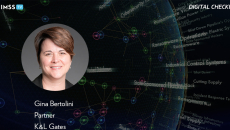
Gina Bertollini, partner at law firm K&L Gates, discusses the ways healthcare providers can safeguard health information from threat actors and the importance of preparing for an inevitable security breach.
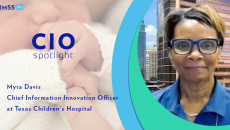
Myra Davis, chief information innovation officer at Texas Children’s Hospital, discusses the new hospital the system is opening in Austin, Texas, and how it's leveraging existing technology to expand automation to ease workforce burden.

Behavioral health providers have been left behind regarding EHRs, says Alisa Chestler, chair of the data protection, privacy and cybersecurity team at Baker Donelson. A new bill will add federal funding to help the sector, but is it enough?
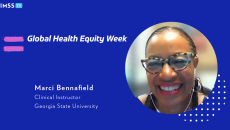
Clinical instructor at Georgia State University's health informatics program Marci Bennafield tells how mobile devices help researchers gauge health inequities and how customizing innovation can help address barriers to access to care.

Elise Kohl-Grant, cochair of the programming committee at the HIMSS New York State Chapter, discusses upcoming events at HIMSS and how the group incorporates diverse patient perspectives, especially regarding the utilization of technology.
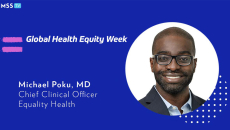
Dr. Michael Poku, chief clinical officer at Equality Health, discusses the high costs of health inequities and the value of investing in independent primary care physicians, along with data to reach a more equitable system.

Dr. Michael Pfeffer, chief information officer at Stanford Health Care, discusses the valuable relationship between the CMIO and CIO in making technology implementation successful, and initiatives Stanford is working on moving into 2024.