AI
Healthcare executives and technology experts met at the first HIMSS AI Leadership Strategy Summit in Chicago to discuss how organizations of all sizes can best leverage AI tools to drive measurable ROI and transform care delivery.
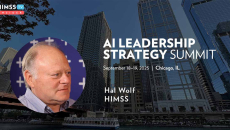
HIMSS President and CEO Hal Wolf, at the HIMSS AI Leadership Strategy Summit in Chicago, discusses how AI is ushering new frontiers around supply chain, knowledge management and patient engagement.

AI deployment in healthcare lags due to data security requirements and patient safety risks, says Ferrum Health CEO Pelu Tran, who recommends creating platforms that let providers securely plug in and swap AI tools as needed.

Also, Vuno has sold its bone age AI as part of ongoing restructuring.

Australian researchers look at the possibility of integrating cardiovascular risk screening with routine breast screening by using AI and mammograms.

Kakao Healthcare's partnership with Providence Health Care will also support its entry into the Canadian market.

The AI-powered app has been tested in over 20 global studies involving 10,000 families.

The funds will be used to expand its direct-to-consumer services and grow partnerships with payers and health systems.
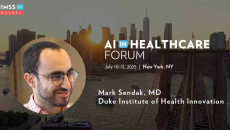
While smaller hospitals and FQHCs often lack the infrastructure to deploy AI, Duke's Dr. Mark Sendak says the Health AI Partnership is working to help them access AI tools that can drive efficiency and reduce administrative burden.
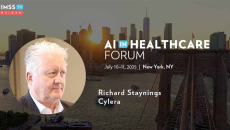
Cylera's Richard Staynings warns that, as many hospitals rush to bolt on AI tools, a lack of visibility into how these models operate and their vulnerabilities may jeopardize data safety and patient trust.