AI

Two new memos update federal AI policy, which the White House says will accelerate innovation, strengthen public trust and prioritize U.S.-developed AI tools.

Peter Shen, North America head of digital and automation at Siemens Healthineers, believes many clinicians don't use AI algorithms either because they don't understand how they work or because very few AI tools receive reimbursement.

IT executives who aspire to be chief AI officers should be passionate, understand that what they do improves lives, build strong partnerships to solve complex challenges, says Mouneer Odeh, the new chief data and AI officer at Cedars-Sinai.

Kathy Bailey, principal data intelligence analyst at Cedars-Sinai Medical Center, discusses how she and her team used generative AI to identify pickleball injuries from patients' chart notes with 80% accuracy.

Developed using a corpus of 38 million clinical texts, the open-source model scored 86% in the Korean Medical Licensing Examination.

Bob Dichter, founder and career coach at Phoenix Rising Career Services, recommends that newcomers to the industry determine how their knowledge and experience can apply to healthcare IT and articulate their value clearly.

Debra Beauregard of Rady Children's Health says aligning new technology with a hospital's strategic priorities and ensuring that clinicians understand the digital road map are essential to making hospitals smarter.

Tjasa Zajc, special advisor for HIMSS, says HIMSS25 Europe will bring in government staff to talk about implementing the European Health Data Space and health system leaders to share use cases for AI and digital technology.

Dr. Ronald Rodriguez, professor of urology UT Health San Antonio, says that the MD/MS in AI dual degree program is designed to generate chief AI officers, clinical AI implementation specialists, healthcare data scientists and AI consultants.
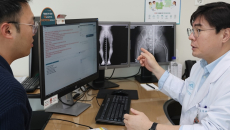
The EMR-linked tool has been implemented across 16 departments.