Data management

Identifying unusual behavior internally is crucial, says Dan Draper, founder and CEO of CipherStash. Encryption-in-use technology can help providers by protecting data and ensuring security for individual, sensitive records.

In-Young Choi, director at Catholic Information Convergence Institute at CMC in South Korea, discusses how data from eight hospitals is converged and distributed to meet an individual department's needs, aiding in the creation of AI solutions.

Holly Miller, chief medical officer at MedAllies, discusses the Sequoia Project's Data Usability Taking Root initiative around adoption of the Data Usability Implementation Guide, which underscores interoperability of trustworthy, usable data.

Dr. Tamara Sunbul, medical director of clinical informatics at Johns Hopkins Aramco Healthcare, advises healthcare organizations on successfully shifting to an EMR, policies on data governance and potentials in healthcare globally.

Behavioral health providers have been left behind regarding EHRs, says Alisa Chestler, chair of the data protection, privacy and cybersecurity team at Baker Donelson. A new bill will add federal funding to help the sector, but is it enough?

AI and machine learning can help overcome barriers to social determinants of health, says COO of HSBlox Lynn Carroll. Understanding where to take action requires analysis of datasets and tools integrated into traditional medicine.
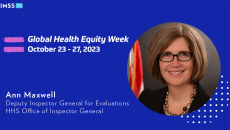
Ann Maxwell, deputy inspector general for evaluations at the U.S. Department of Health and Human Services Office of Inspector General, discusses the case for making the pandemic-related CMS telehealth expansion permanent.

The California-based company added a senior vice president of marketing and general manager of MapEnhance to its team and launched its new AI-enabled MapLab.


Companies will have access to real-world patient data for clinical decision-making and research support, including hypothesis testing and cohort analysis.