Population and Public Health

For his upcoming HIMSS26 presentation, ChristianaCare's Greg O'Neill discusses how practical tools like plain language, pictograms, multilingual translation and tailored discharge instructions can boost medication compliance.

According to Clearwater's Jackie Mattingly, sustainable cybersecurity funding for rural hospitals remains elusive, with many states allocating little to no Rural Health Transformation Program money to security.

Tom Gillette, CIO at Miami Beach-based Mount Sinai Medical Center, and Erich Glasbrenner, the health system's chief nursing informatics officer, are focused on transforming patient access and experience in the year ahead.

Deep GI project lead Dr Rungsun Rerknimitr reveals a three-year plan to validate and scale a deployable AI-powered diagnosis system beyond colorectal screening.
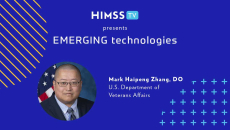
Acting assistant under secretary for health at the U.S. Department of Veterans Affairs at the U.S. Department of Veterans Affairs, Dr. Mark Zhang, discusses the VA's research into 3D-printed biological material for veterans.

Despite tightening barriers to entry over the years, Europe and the US are still key to global expansion for Korean startups, says Sky Labs CEO Jack Byunghwan Lee.

Teresa Cope, Manx Care CEO, discusses the Isle of Man's 2026 Innovation Challenge that seeks tools that address the island's health system's needs, including improving access and efficiency for a small, geographically distinct population.

Private rheumatologist Dr Anandita Santosa in Singapore notes how current AI in healthcare priorities practically leave autoimmune and rheumatic diseases behind and shares what can be done to build a more comprehensive AI-driven preventive care ecosystem.

Eitan Okun, head of the Paul Feder Laboratory for Alzheimer's Disease Research at Bar-Ilan University, studies aging individuals and he is currently evaluating the link between maternal cognitive decline and pregnancy with a Down syndrome fetus.

A Mesothelioma Center report finds that more than half of Americans use ChatGPT for medical symptoms, widening a gap between patient reliance on AI and clinician concerns.