Public Policy

The Trump Administration's artificial intelligence proposals call on Congress and federal agencies to develop risk-based approaches to health AI standards while streamlining innovation. The list of tasks for lawmakers to tackle is extensive.

The COVID-19 pandemic exposed gaps in Italy's healthcare data availability and interoperability, according to Elena Sini of Italy's GVM Care and Research, spurring a nationwide push to improve data quality, access and trust.

As CMS deploys AI tools and data analysis to uncover possible Medicare and Medicaid fraud, COO Kimberly Brandt explains that suspected providers are offered education on billing rules and three chances to correct any errors.

According to CMS' Amy Gleason, the agency is inspiring innovation by offering vendors the opportunity to develop secure, CARIN code-certified patient-facing apps. These apps will be made available via the Medicare.gov website.

Hal Wolf, HIMSS CEO, and Dr. Mehmet Oz, CMS administrator, talk about how using digital tools, including AI agents, can help Americans manage their own care and stay healthier longer, potentially unlocking massive economic gains.

At HIMSS26, leaders from the agency's Fraud Defense Operations Center discussed how the initiative is helping detect fraud in real time.

As CMS removes procedures from its Inpatient-Only (IPO) list, Allison Oakes, Trilliant's chief research officer, recommends that hospitals establish a clear outpatient strategy to avoid losing the income these procedures bring.
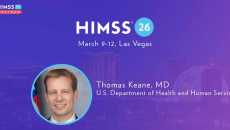
Dr. Thomas Keane of ASTP/ONC discusses the agency's initiative that is piloting programs in nine states to ensure that behavioral health data can flow securely between providers, vocational programs and housing authorities.

Aneesh Chopra, the first chief technology officer of the United States appointed by President Barack Obama and currently the chair of the Arcadia Institute, discusses how AI regulation has evolved through different presidential administrations.

The first CTO of the U.S. discusses why he is bullish on AI's potential to enhance healthcare productivity, boost drug discovery and advance value-based care.