Quality Care

Brian Smith, chief pharmacy officer at Shields Health Services, says that, while automation and AI can speed up the prior authorization process, patients may face other barriers to care that require human intervention.

PRET, developed at the Hong Kong University of Science and Technology, uses in-context learning to recognise 18 cancer types and complete new pathology tasks with a few annotated slides.

The board is calling for the immediate suspension of the state's AI-enabled prescription renewal program, citing patient safety concerns and lack of clinical oversight.

The pair will integrate real-time diagnostic data into marketing workflows, with the aim of helping pharmaceutical companies target clinicians at treatment decision moments.

Ambient AI relieves clinicians' cognitive burden by capturing visits and drafting patient notes so they can be fully present in the encounter and patients feel seen and heard, says Matt Troup, clinical strategy principal at Abridge.

ChatGPT for Clinicians uses OpenAI's GPT-5.4 model and allows clinicians to earn CME credits.

Medicomp Systems CEO David Lareau says the company's panel of clinicians creates data points that its clinical intelligence engine uses to validate ambient AI outputs and prevent incorrect data from reaching patient records.

AI policy is unfolding in real time on the local and national levels, and HIMSS' Robert Havasy says HIMSS26 provided a venue to hear about these changes from federal and state legislators.
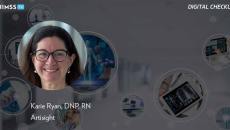
Karie Ryan, chief nursing officer at Artisight, describes how the company's computer vision technology aims to improve patient safety and staff efficiency among providers, nurses and other care team members in the hospital setting.

Brittany Cyriacks, UCHealth clinical informatics program director, talks about how veteran virtual ICU nurses act as "angels in the sky," stepping in to help less experienced nurses spot sepsis and patient deterioration.