Strategic Planning
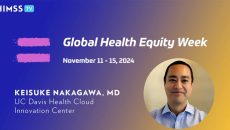
Dr. Keisuke Nakagawa, director of innovation at UC Davis Health, highlights how artificial intelligence can help unearth social determinants of health and how AI can advance health equity.
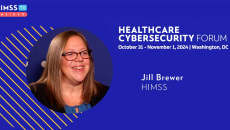
Third-party risk management was the No. 1 weak link reported in organizations' cyberdefense strategies, says Jill Brewer, market insights lead at HIMSS. The No. 1 technology to use is AI-powered threat-detection and analytics.

Donald Rucker, chief strategy officer at 1upHealth, discusses the details associated with CMS' Medicare Star Ratings, balancing the complexity and interest of patients and taxpayers, and what plans need to do to up their rating.

Dugan Winkie, head of commercial strategy at Cedar, discusses the revenue cycle management-focused company and how it works with strategic partners to ensure payments are satisfied using conversational AI and empathetic communication.

Maite Malet, Asabys Partners director of investments and corporate development, discusses the Barcelona-based firm’s €180 million ($200 million) raise and its plans invest in 12 to 15 health tech companies to expand from the EU to the U.S.

Medical illustrator David Bolinsky, E.mersion Studios CEO and creative director, creates animations representing molecular and cellular biology, and says AI image generators’ hallucinations may affect scientific medical illustration.

Jenn Kerfoot, chief strategy and growth officer at DUOS, discusses why only seven plans made five stars for Medicare Advantage Star Ratings, as opposed to 30 the previous year, and how plans can ensure a positive rating in the future.
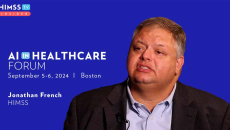
Jonathan French, senior director of public policy at HIMSS, says the organization hopes its members participate in the public policy development process and understand the real-world ramifications of that policy.
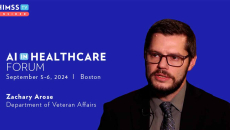
Zachary Arose, healthcare technology management chief at the Dayton VA Medical Center, says the VA has integrated an AI algorithm for early detection of lung nodules. AI is also adding administrative and bureaucratic efficiencies.
Over the next year health system IT leaders can expect real and pragmatic applications of AI beyond the experimentation mode into real projects with real value, says Greg Miller, vice president of business development at Carta Healthcare.