Strategic Planning
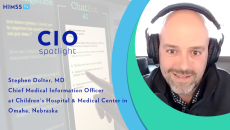
Dr. Stephen Dolter, chief medical information officer at Children's Hospital and Medical Center Omaha, discusses the pros and cons of the evolution of AI in health and where future applications of AI may be useful in the clinical setting.

Instead of a sick care system, where patients only come in when there is a health issue, predictive and proactive care should be the norm, explains Ran Balicer, chief innovation officer at Clalit.

ZeOmega's Associate VP of interoperability strategy, Michael Gould, and VP of advanced analytics, Pravin Pant, discuss how data can help payers and providers understand patients' social determinants of health and reduce disparities in care access.

Chad Peterson, managing director at NetSPI, discusses how care organizations can protect health information by ensuring HIPAA compliance – and what companies can do to reduce vulnerability through reconfiguration.

Andrew Eye, cofounder and CEO of ClosedLoop.ai, discusses how AI can improve or increase health disparities, the value of explainable AI and the importance of open algorithms to ensure accuracy and fairness in data integrations.

The approach Connecticut is taking on AI is not to pause it because it has great potential but to keep a close eye on it, states Sumit Sajnani, health information technology officer at the Connecticut Office of Health Strategy.

Surescripts' focus is on lowering patient costs and improving both quality of care and patient safety, explains CMIO Dr. Andrew Mellin.
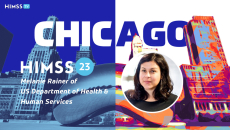
Melanie Rainer, Director of HHS' Office for Civil Rights, shares how OCR helps providers resume compliance by the August deadline under HIPAA rules when they deliver telehealth services.

ChatGPT has a lot of potential to improve healthcare, but it lacks the human touch and comes with ethical and legal issues, explains R. Ryan Sadeghian, CMIO of Hunterdon Healthcare System.

The first product from the health system's department of care transformation and innovation can predict the load of a hospital within 72 hours and then match that load with a clinical team, says Dr. John Doulis.