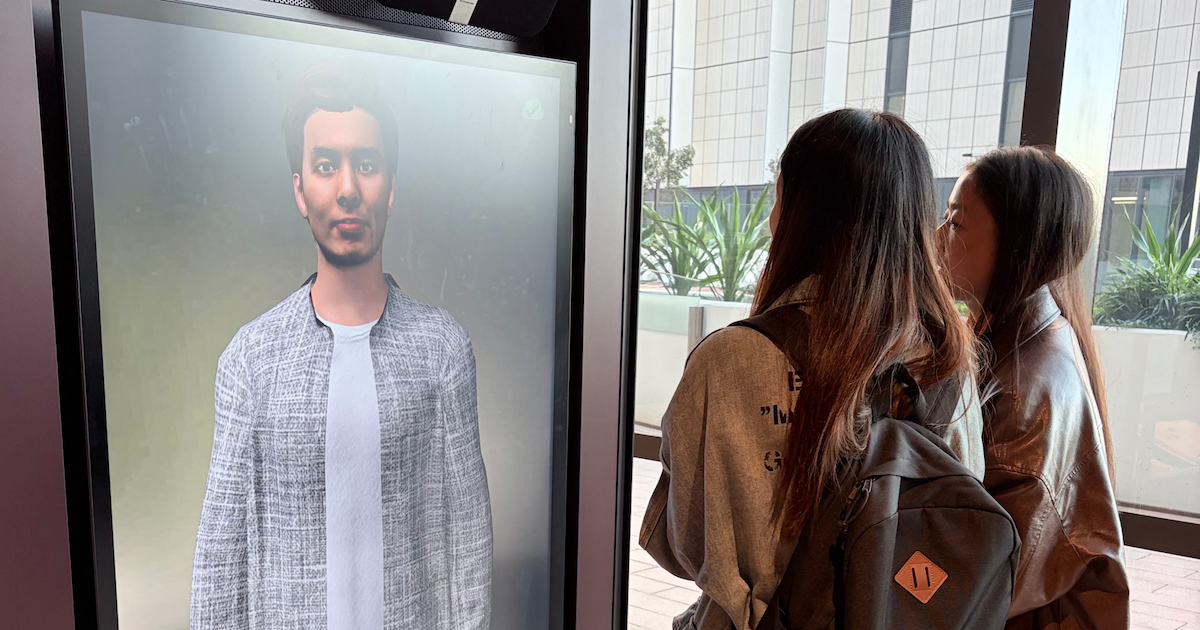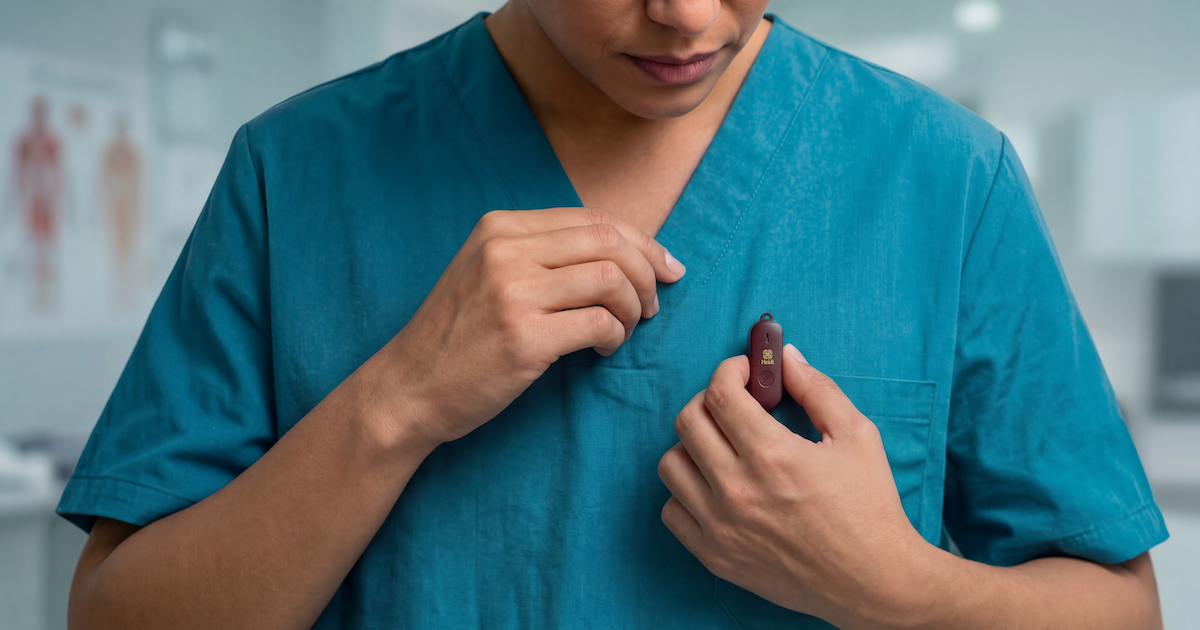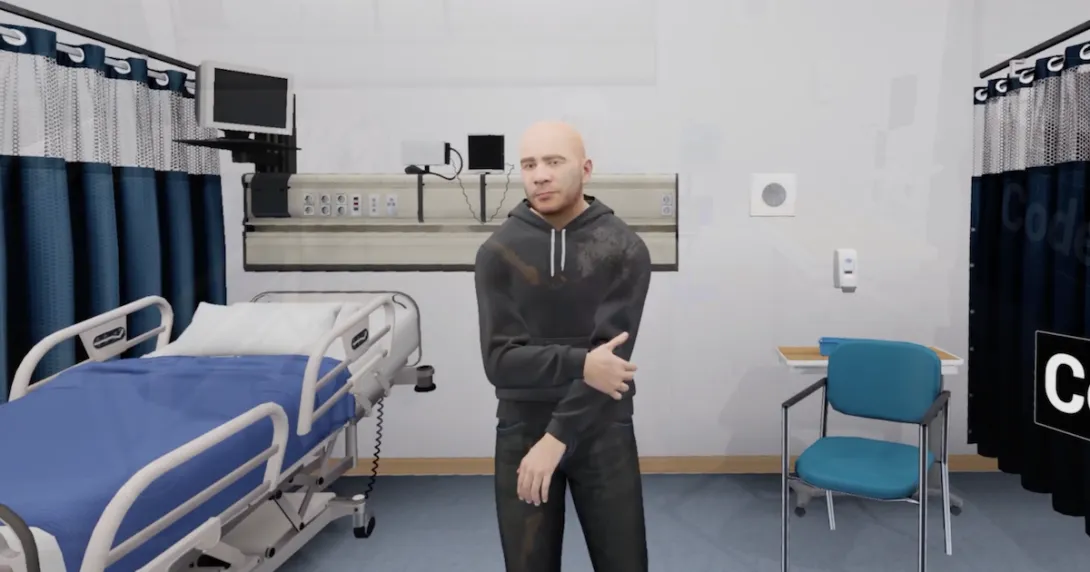
Photo: Alpha Immersion YouTube
Amid mounting cases of hospital violence, a virtual reality-based programme developed at Edith Cowan University has been shown to help nursing students become more confident and prepared in managing aggressive patients.
WHAT'S IT ABOUT
The study, done by an ECU doctoral student, Joshua Johnson, recruited 221 undergraduate nursing students to complete a 20-minute VR de-escalation training programme, I-VADE.
Based on a media release, the students were organised into groups of 20 and completed the training simultaneously using individual headsets, guided and debriefed by at least two trained facilitators.
The scenarios focus on communication, situational awareness, and decision-making under pressure, the same core skills clinicians rely on during real interactions, shared Associate Professor Brennen Mills, who led the development of the I-VADE programme.
"Rather than training people to follow a fixed script, the experience is designed to expose users to a range of behaviours and escalation patterns, requiring them to adapt in the moment. That variability is important, because in practice, no two incidents are the same," he told Mobihealth News.
Structured reflection is also built in, helping reinforce learning. The platform captures structured data on how users interact within each scenario, including their decisions.
FINDINGS
"We had an overwhelmingly positive response from the students that took part in the study. We found a statistically significant improvement in their confidence to manage patient aggression," Johnson was quoted as saying in a media release.
"In trials and early deployments, we've seen improvements in participants' confidence and perceived preparedness, and clinicians have reported applying techniques from the training in their day-to-day practice," added A/Prof Mills.
Findings, which have been published in the journal Teaching and Learning in Nursing, also suggested I-VADE's potential to scale.
"Our initial implementations of I-VADE in Western Australia were managed and overseen directly by us. But this research saw the I-VADE programme be administered on the other side of the country, and by people who had no part in the programme's development," Johnson said.
I-VADE was created by the ECU Simulation and Immersive Digital Technology Group, in collaboration with a clinical advisory group consisting of hospital-based work health and safety managers, workplace violence training coordinators, and experienced frontline healthcare workers.
WHY IT MATTERS
Citing recent government data, the ECU media release notes that hospital assaults in Australia increased by around 50% across Queensland, New South Wales, and Victoria between 2015 and 2018. It also cited a survey of over 3,000 Australian nursing and midwifery staff, which found that almost eight in 10 experienced recent workplace violence.
Johnson said that persistent exposure to these incidents results in burnout, workplace absenteeism, early exit from the profession, and diminished capacity to treat and manage patients effectively.
"Workplace violence preparedness training in healthcare is recognised as important, but in practice, it's often inconsistent and limited in how it's delivered," claimed A/Prof Mills.
"A traditional mix of classroom-based education, online modules, and occasional simulation sessions may be useful for building awareness and understanding policies, but it struggles to replicate the complexity and pressure of real-world clinical interactions," he said.
"Managing aggression is highly situational; it involves communication, body language, and decision-making in rapidly evolving situations."
As those who enter the health profession feel underprepared when they encounter real incidents, A/Prof Mills said, the sector increasingly sees the need for "more immersive, practical, and measurable training approaches that better reflect the realities of frontline care."
According to the I-VADE lead developer, data captured by the VR-based platform, including decisions, helps learners understand how their communication and decision-making influence outcomes.
"For organisations, it provides visibility into training engagement and how staff are responding across different scenarios, which can support more informed education and workforce development," the ECU associate professor added.
Multiple sites across Australia are now implementing I-VADE to train frontline healthcare workers. It is available on Alpha Immersion, with commercial trials planned for later this year, the university said.
"We're working with health services and education providers to deploy the platform in real-world environments across different clinical areas, professional groups, and experience levels. The emphasis is on feasibility, integration, and flexibility, understanding how the platform fits within existing training frameworks, how it can be delivered consistently across departments, and how organisations can adopt it in a way that suits their operational context," A/Prof Mills mentioned to this publication.
"We're also gathering structured feedback from users and organisations to refine delivery models and support scalable, system-wide rollout."
"As the programme scales, there is an opportunity to build on this foundation with more advanced analytics and adaptive features, such as tailoring scenario complexity over time," he further mentioned.
THE LARGER TREND
Another VR-based training programme developed at ECU helps paramedics and ambulance officers prepare for unplanned out-of-hospital births. Called NEONATE, it features a 30 to 40-minute VR simulation of neonatal care scenarios during birth emergencies.
A similar programme in Hong Kong has been shown to improve the skills and confidence of carers of high-risk infants.
Meanwhile, VR programmes in Thailand and Singapore have gamified the training for emergency collaborations and intravenous cannulation.