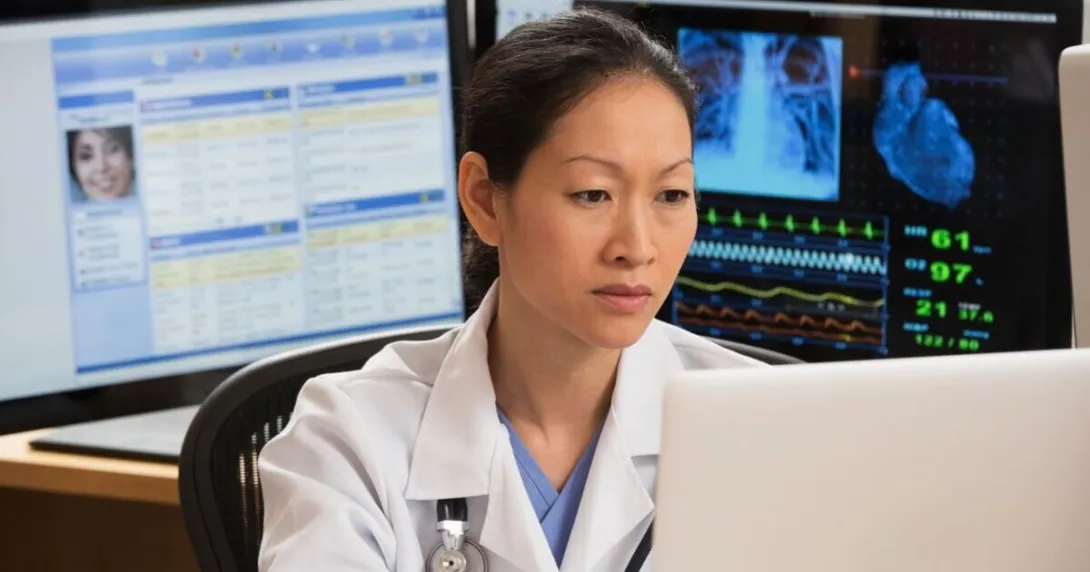
Photo: Ariel Skelley/Blend Images via Getty Images
The South Korean Ministry of Food and Drug Safety has granted its first approval of a generative AI-powered software for draft chest X-ray reporting.
WHAT'S IT ABOUT
Local health tech startup Soombit.ai has obtained Class III approval for AIRead-CXR, a software based on a vision language model for medical imaging that analyses CXRs and generates text-based preliminary radiology reports.
Trained on more than 14 million CXR studies, it covers 57 conditions, including pleural effusion, pneumothorax, pulmonary oedema, lung nodules, cardiomegaly, active tuberculosis, rib fractures, and clavicle fractures.
WHY IT MATTERS
According to the MFDS, the product is the first genAI-based digital medical device in the country to receive approval under the Digital Medical Products Act, which came into force last year and covers digital therapeutics (DTx) and AI-based diagnostics.
The approval is also the first to apply the MFDS's "Guidelines for Approval and Review of Generative AI Medical Devices" issued last year.
The regulator said clinical trial results, based on evaluations by five experienced radiologists, showed the software performed at a level comparable to real-world radiology interpretations.
THE LARGER TREND
This year, the MFDS set aside 15 billion won ($10.8 million) in its budget to hasten the commercialisation of local AI applications in the food and medical device sectors. It supports the Korean government's focus on AI, which it has recognised as a key enabler of healthcare transformation.
In recent years, the MFDS has approved innovative devices, including DTx for insomnia and a cuffless, ring-type blood pressure monitor. In June last year, it cleared the first AI-powered solution that analyses ECG to screen for renal dysfunction, developed by Vuno.
ON THE RECORD
"To the best of our knowledge, this is the first regulatory approval of a generative AI-based SaMD in medical imaging built from the perspective of a vision-language model that directly takes medical images as input and generates preliminary radiology reports," Soombit.ai co-founder and CEO Woong Bae said in a LinkedIn post.