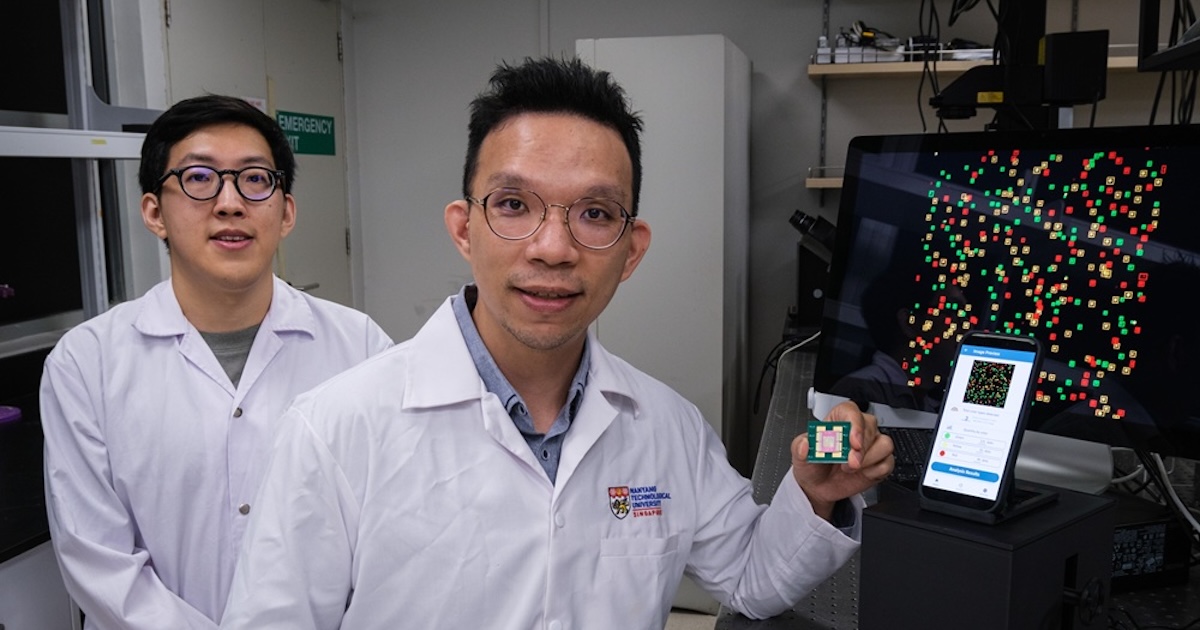
Photo courtesy of Ubie
Japanese startup Ubie has unveiled a new large language model-based chat platform to support patients' decisions whether to self-manage or seek professional care for their conditions.
HOW IT WORKS
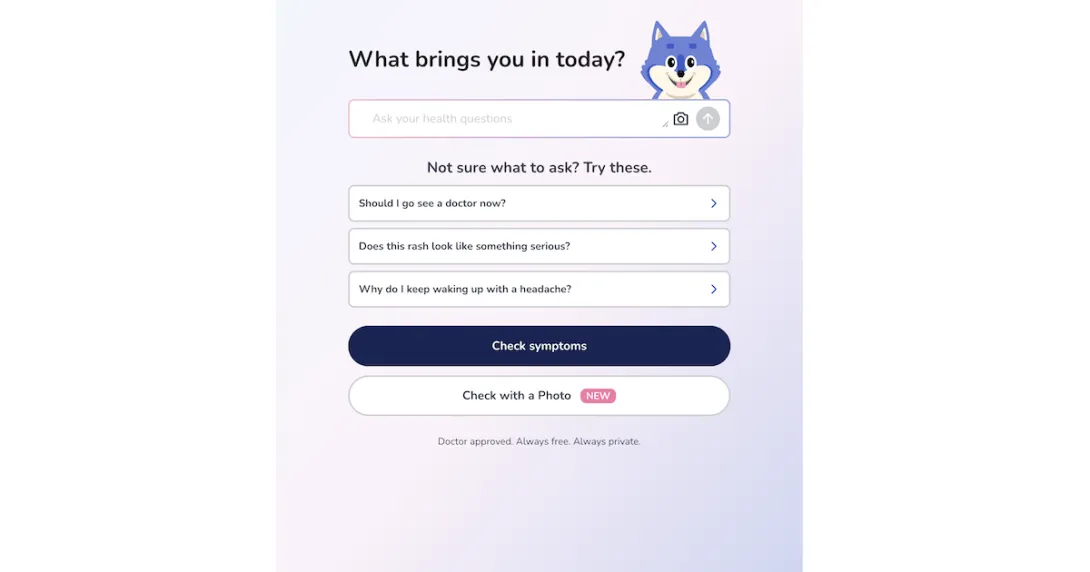
The free chatbot, called Ubie Consult, features conversational dialogue, smart buttons, photo uploads, over-the-counter advice, and trusted routing to appropriate medical attention.
In an interview with Mobihealth News, Dr Kei Ishii, a Medical Strategy and Clinical Insights fellow at Ubie, clarified that Consult "provides information and predictions rather than a final medical diagnosis, acting as a care navigation or symptom translator [instead] of a doctor."
It is programmed, Dr Ishii said, to "recognise high-risk symptoms (like chest pain or severe breathing difficulty) and will immediately trigger a prompt for the user to seek emergency care."
The company, in a media release, further described Consult as being "designed to closely mirror the structure and pacing of talking to a doctor."
The model, trained on a database of peer-reviewed medical literature and clinical guidelines, was validated through Mayo Clinic Platform's global, de-identified data network.
Ubie's applications have more than 15 million monthly users worldwide. The company leverages a panel of over 50 medical specialists for accuracy, and is connected to more than 1,800 healthcare providers for real-world feedback.
WHY IT MATTERS
With new healthcare LLMs flooding the market, Ubie positioned its new tool as a safer alternative to general-purpose AI for patient-facing care guidance.
The company cited recent research suggesting general-purpose LLMs are not yet reliable for widespread medical use, noting that one study found they identified conditions correctly in fewer than 34.5% of cases, while another reported ChatGPT Health under-triaged half of medical emergencies.
"People are becoming accustomed to interacting with AI and chatbots on a daily basis, which is positive, but currently comes with too much risk," Kota Kubo, co-founder and co-CEO of Ubie, said in a statement.
Dr Ishii further explained that Consult's chat function sits on top of the company's AI Symptom Checker, which maps symptoms to disease predictions, rather than relying on a chat-first design. She said this differs from some larger LLMs that are built to prolong conversations instead of prioritising accurate answers and consistent triage.
Moreover, Ubie recognises that while general-purpose LLMs can handle large volumes of queries, they remain "dangerously inconsistent" in triage.
"The goal is to ensure patients don't 'drop off,' and we give them a clear, actionable map for their next steps," Dr Ishii said.
Asked about Consult's performance across patient groups, Dr Ishii said Ubie serves a large and diverse patient base, adding that concerns in psychiatric, urologic, and women’s health are "actually over-represented." She did not provide subgroup performance data by age, gender, language, or comorbidities.
Meanwhile, Dr Ishii said the most relevant biases arise around race and gender in how criteria such as pain severity are evaluated. "Our model asks for race to better understand our patient population, but not to discern whether or not the symptoms they're describing are accurate," she explained. Capturing that information also enables assessment of differences across groups and helps ensure patients are served equally well.
THE LARGER TREND
Ubie recently announced a new collaboration with Mayo Clinic to co-develop a unified AI-powered chat and voice platform for health systems. Called Smart Support, it will integrate directly into clinical workflows and utilise Consult as the base for the user interface.
Two years ago, the Japanese startup also released Checkup, a patient app for recording vital signs, enabling self-health management.
Since its 2022 Series C funding raise, the company reported last year that it raked in over $125 million in cumulative funding following investments from Google, Japan Post Capital, NTT DOCOMO, Seven-Eleven Japan, Japan Finance Corporation, and The Shoko Chukin Bank.