clinical workforce

MaryAnn Connor, NYU adjunct informatics professor, and Olga Kagan, FANA CEO, recommend that healthcare organizations hold recurring cyberattack and outage drills to prevent care disruption when digital tools are not available.
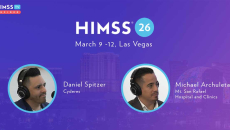
Daniel Spitzer, Cyderes' SVP and general manager, healthcare, says understanding attack vectors and having a partner to scale cybersecurity efforts can help rural health systems safeguard their networks.
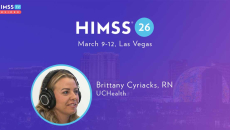
Brittany Cyriacks, UCHealth clinical informatics program director, talks about how veteran virtual ICU nurses act as "angels in the sky," stepping in to help less experienced nurses spot sepsis and patient deterioration.
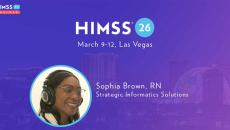
Sophia Brown, RN, Strategic Informatics Solutions' founder and CEO, recommends that health systems allow clinicians to test new AI tools before implementation to ensure they work well and are useful.
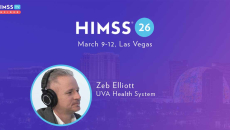
In the HIMSS Executive Connect program, UVA Health CTO Zeb Elliott learned to engage his teams more effectively to boost their output and get better results without overextending them.
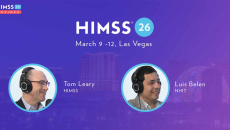
According to HIMSS' Tom Leary and Luis Belen, CEO of NHIT, NHIT INSPIRED connects college students with HIMSS mentors and industry partners. The program has shown early success in helping students find industry jobs.

According to Tom Leary, HIMSS Foundation executive director, the foundation assists with costs associated with earning digital healthcare certifications to remove barriers for students from underserved communities.

The value of HIMSS membership, explains Tammy Kwiatkoski, HIMSS' senior director for global communities, is not measured in online engagement metrics, but in the lessons and resources that members take back to their workplaces.

Within health systems, AI agents can serve as assistants for clinicians and revenue cycle teams so they can focus on higher-value, purpose-driven work like patient care and decision-making, Google's Aashima Gupta explains.
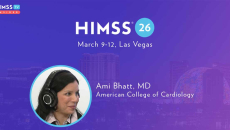
Rather than serving on advisory boards, experienced clinicians are needed to help develop wearables that align with real-world care delivery, according to Dr. Ami Bhatt, Chief Innovation Officer at the American College of Cardiology.