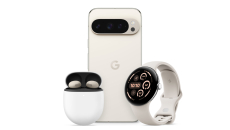
During its Made by Google event, the tech giant unveiled new machine learning features for the Pixel Watch 3 that collect and analyze a wearer's personalized data to determine fitness training effectiveness, sleep quality and recovery needs.

Tx-LLM was fine-tuned from Google's Med-PaLM 2 and created to analyze a variety of chemical or biological entities to assist with the drug-discovery pipeline.

Med-Gemini-3D can read 3D scans, generate radiology reports and answer questions, while Med-Gemini-Polygenic can predict health outcomes based on genomic data.

The AI-enabled offerings will be built into Pager’s Connected Care platform.

The tech giant announced a new AI-enabled chest X-ray offering, an all-inclusive dermatology dataset, expanded partnerships and personal health LLMs for Fitbit.
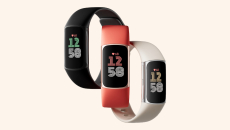
The Wearables for Metabolic Health study will use Fitbit behavioral and biometric data and laboratory tests to attain insights into metabolic health and disease prevention.

The two models of MedLM are built on the tech giant's medical LLM Med-PaLM 2, with one designed for complex tasks and the other for scaling across various tasks.

The tech giant revealed it created an LLM optimized for diagnostic reasoning with the ability to generate a differential diagnosis or assist clinicians in coming to a diagnosis.

Dr. Michael Howell, chief clinical officer at Google, discusses Med-PaLM's evolution in 2023 and recommendations for regulators developing rules for AI use in healthcare.

When combined with Med-PaLM 2, providers and life sciences companies can obtain answers to questions about patient medical records and general medical knowledge.