machine learning
Infolytx's natural language processing technology is helping with clinical trial cohorts, explains CEO Badrul Husain.
Tej Anand, professor of practice at the University of Texas' McCombs School of Business, explains how blockchain can help eliminate "redundant work, rework and reconciliation."
Chad Konchak, assistant vice president of Clinical Analytics at NorthShore University HealthSystem, says the challenge is in the cultural maturity for people to realize what the data can do for them.
Duke University Health System Chief Analytics Officer Stephen Blackwelder discusses what’s the next frontier of analytics.
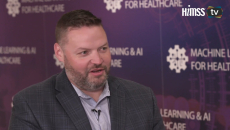
Rob Wellen, regional vice president at KenSci, says one of the most common data analytics questions from providers is how to operationalize machine learning and artificial intelligence.
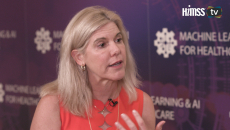
Providence St. Joseph Health’s chief medical analytics officer is both a physician and a data scientist so understands clinical context as well as data structure, says CCO Amy Compton-Phillips.
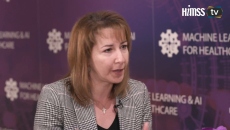
Advocate Aurora Health Chief Health Information Officer Tina Esposito explains how her organization is using predictive analytics to identify high-risk patients.
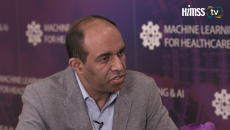
Start with engaging the clinicians and have a team to standardize care to reduce variation for measurable changes, says Srinivasan Suresh, MD, VP at UPMC Children's Hospital of Pittsburgh.
By listening for agonal respirations, an algorithm described in a recent NPJ Digital Medicine paper offers a path for smartphone- and personal assistant-based heart attack detection.
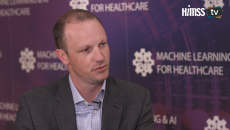
Michael Schwarz, executive director of IS at Indiana University Health System, says you don’t just jump into advanced analytics and machine learning. There’s a natural process.