Emerging Technologies

PRET, developed at the Hong Kong University of Science and Technology, uses in-context learning to recognise 18 cancer types and complete new pathology tasks with a few annotated slides.

An alternative to ointments and bandages, it uses light to regulate drug release based on the patient's condition.
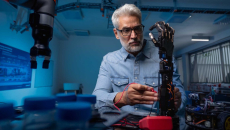
The CYBORG study will evaluate the company's muscle-machine interface, which uses an implantable sensor array in an amputee's residual limb to enable real-time, intuitive control of prosthetic limbs and robotic systems.

Within health systems, AI agents can serve as assistants for clinicians and revenue cycle teams so they can focus on higher-value, purpose-driven work like patient care and decision-making, Google's Aashima Gupta explains.
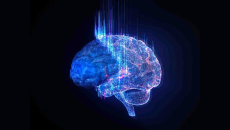
The company's brain-computer interface uses direct cortical electrical stimulation to help with motor recovery in people with chronic stroke-related impairments.

Dr. Rowland Illing, chief medical officer at Amazon Web Services, sat down with MobiHealthNews to discuss how innovations have and will transform healthcare.

The U.S. Department of Veterans Affairs said the initiative gives non-pharmacological treatment to veterans facing chronic pain, anxiety, stress and social isolation.
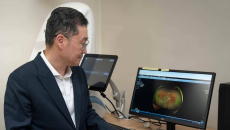
The AI decision-support system, trained on multimodal ophthalmic data, will assist in diagnosis, treatment planning, and disease monitoring and management.
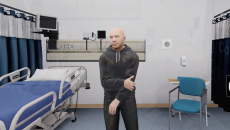
A 20-minute VR programme developed at Edith Cowan University uses branching scenarios to train adaptive de-escalation skills in unpredictable patient encounters.

A new big data-based predictive model developed in Hong Kong enables more dynamic monitoring of six common cardiovascular diseases by capturing near-real-time biological changes.