Quality Care

Execs overwhelmingly cite genAI as having the most significant impact in healthcare this year, though others provide alternative takes on the years' events.

Rx Savings Finder allows Walgreens' pharmacy customers to access low-cost prescriptions by comparing the price of medications on third-party discount cards.

Wearable sensors provide physiological biomarkers, helping to determine reasons for an athlete's performance and the necessity of altering training to avoid injury.
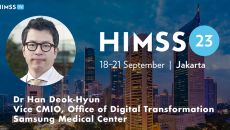
Dr Han Deok-Hyun, vice CMIO of Samsung Medical Center's Office of Digital Transformation, discusses how the APAC hospital received Stage 6 HIMSS AMAM and why it helps solidify its vision of providing state-of-the-art patient care.

The company scored Class III Shonin clearance in Japan for its stroke platform and launched Rapid Edge Cloud, allowing continued AI access despite cloud connectivity.
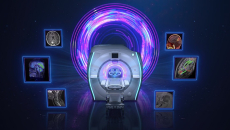
The medtech company announced 40 innovations at RSNA23 aimed at streamlining the provider and patient healthcare experience.

EHR giant Epic’s executive vice president of research and development, Sumit Rana, discusses generative AI use in healthcare, the benefits and pitfalls of the tool, and how providers use the company's technology for clinical workflow.

The funds will be used to develop a comprehensive AI imaging model powered by imaging data to improve diagnostic precisions and early detection of conditions.

A study published in the New England Journal of Medicine says GPT-4 correctly diagnosed 52.7% of complex cases compared to only 36% of medical journal readers.

The company's product, Distill, uses machine learning algorithms and LLMs to perform administrative, clinical and research tasks that require chart review.